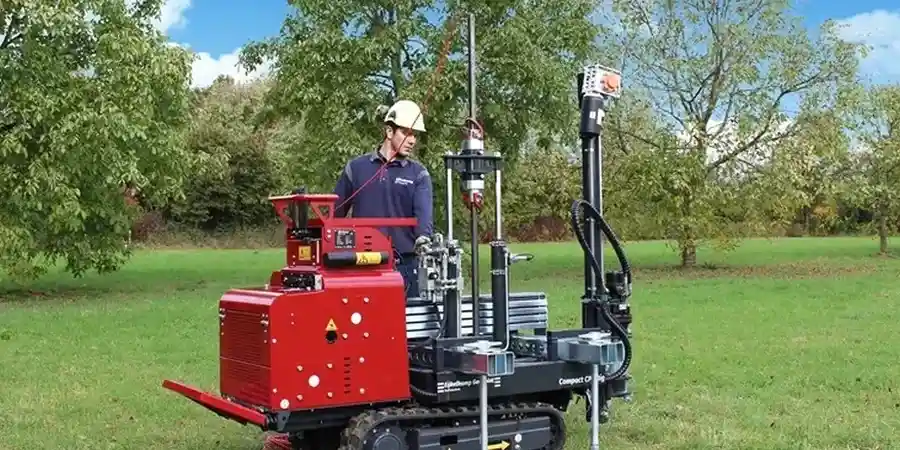
The Leda clay that blankets much of the Ottawa Valley is among the most sensitive soils in Canada—lose its structure under load and shear strength drops by as much as 90%. Anyone who has cored through Champlain Sea deposits near the Rideau River knows the difference between a stiff dry crust and the liquefiable silts sitting right below the water table at 2.5 to 3.5 metres. That is precisely where a CPT (Cone Penetration Test) becomes indispensable. Instead of waiting for lab results from disturbed Shelby tube samples, the electric cone pushes through these layered profiles at a steady 20 mm/s, recording tip resistance, sleeve friction, and equilibrium pore pressure every 10 mm. For projects in liquefaction-prone zones east of downtown, we pair CPT soundings with pore dissipation tests to estimate in-situ permeability and drainage potential. The resulting log provides a nearly continuous profile that helps distinguish thin sand seams from the massive clays that define Ottawa's foundation risk.
A single CPT sounding near the Ottawa River can reveal three glacial cycles in 30 metres of log—no other field test captures that stratigraphic detail with such vertical resolution.