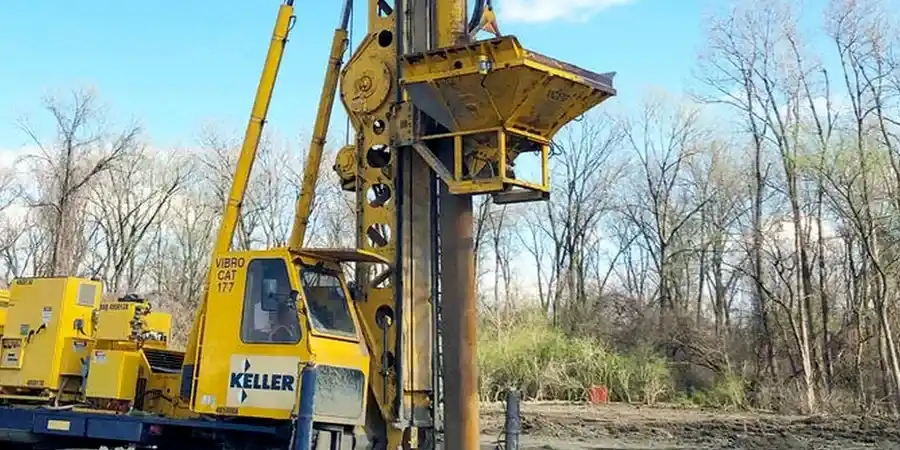
A common mistake we see on Ottawa construction sites is treating deep granular fills like standard granular soils and applying vibrocompaction design parameters copied from projects in Toronto or out west. The Leda clay present across much of the Ottawa Valley is highly sensitive and loses significant strength when remolded, meaning that vibration energy intended to densify overlying sand layers can trigger unexpected settlement in the clay below if the design frequency and amplitude are not carefully tuned. This is not a hypothetical scenario: we have been called in to retrofit foundations after poorly calibrated vibrocompaction triggered a chain of consolidation effects in the marine clay. A site-specific design that integrates CPT testing data with the National Building Code of Canada (NBCC 2020) seismic site class requirements transforms vibrocompaction from a risky operation into a predictable Improvement method.
In the Ottawa Valley, vibrocompaction design must respect the sensitivity of Leda clay: the energy you put into the sand must not awaken the clay below.