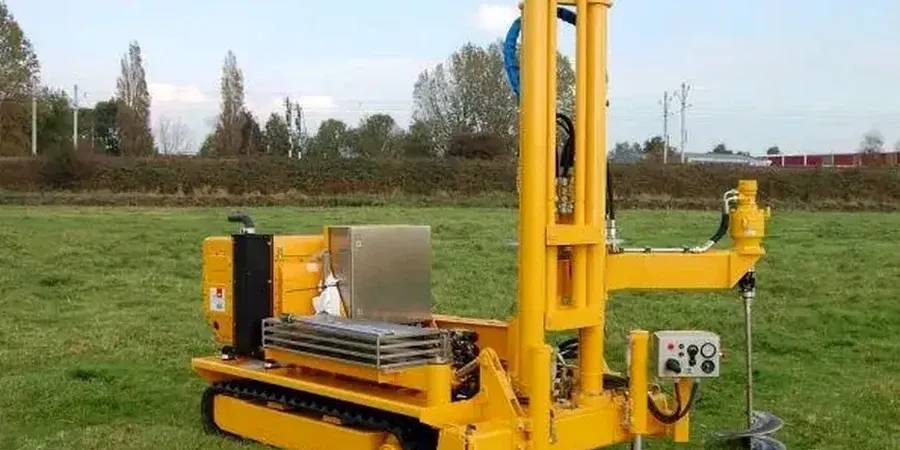
Geotechnical and environmental investigation in Ottawa forms the critical first phase of any construction or infrastructure project, providing the subsurface data necessary to design safe, stable, and durable foundations. The category encompasses a range of in-situ testing, sampling, and laboratory analysis methods aimed at characterizing soil, bedrock, and groundwater conditions. In a city built on complex glacial deposits and sensitive marine clays, understanding what lies beneath the surface is not just a regulatory requirement but a fundamental necessity to mitigate risks such as differential settlement, slope instability, or excavation collapse. From the dense urban core of Centretown to the expanding suburbs of Kanata and Barrhaven, investigation programs guide structural engineers, planners, and contractors in making informed decisions that protect both public safety and project investments.
Ottawa’s subsurface is dominated by the legacy of the Champlain Sea, which inundated the region roughly 10,000 years ago and left behind extensive deposits of Leda clay, a sensitive glaciomarine soil notorious for its quick-clay behaviour and potential for large retrogressive landslides. Overlying this formation are glacial tills, sand and gravel lenses, and recent alluvial sediments, creating a highly variable stratigraphy that can change dramatically over short distances. Bedrock, primarily limestone and shale of the Ordovician Ottawa Group, is generally encountered at shallow to moderate depths but can present karstic features or variable weathering profiles. Groundwater levels fluctuate seasonally and are influenced by proximity to the Ottawa River, Rideau River, and numerous buried paleochannels. These geological complexities make thorough investigation indispensable, as designing on assumed rather than verified conditions can lead to costly failures, particularly in areas mapped as having high landslide susceptibility.
In Ontario, geotechnical investigations must comply with the Ontario Building Code (OBC), which references the National Building Code of Canada and mandates site-specific assessments for most structures. The Professional Engineers Ontario (PEO) guidelines require investigations to be carried out under the supervision of a licensed professional engineer, with the scope dictated by the building’s importance category and the site’s geological sensitivity. For environmental site assessments, the Ontario Regulation 153/04 (Records of Site Condition) sets the framework for Phase I and II investigations, particularly for properties undergoing a change of use to a more sensitive designation. Borehole drilling, test pitting, and in-situ testing must adhere to ASTM and CSA standards, with all data reported in a format that allows for independent peer review. Municipalities like the City of Ottawa also enforce their own conservation authority regulations when work occurs near watercourses or within floodplains, adding another layer of oversight to investigation scoping.
The types of projects requiring comprehensive investigation in Ottawa span residential subdivisions, high-rise condominiums, institutional buildings, transportation corridors, and brownfield redevelopments. For example, a deep excavation in the downtown core for a parking garage demands detailed knowledge of earth pressures and dewatering requirements, while a light rail transit extension relies on continuous subsurface profiling to predict settlement and vibration impacts. Specialized in-situ tests, such as the CPT (Cone Penetration Test), are increasingly used to supplement traditional boreholes by providing near-continuous data on soil stratigraphy and pore pressure response, particularly useful in the soft clay deposits prevalent in Ottawa’s east end. Similarly, geophysical surveys and pressuremeter testing add value in characterizing rock mass quality and deformation modulus for tunnel design. Each investigation program is tailored to the specific geotechnical and environmental questions posed by the project, ensuring that construction risks are identified and managed from the earliest planning stages.
A typical investigation encompasses borehole drilling, soil sampling, in-situ tests like Standard Penetration Tests or CPT, groundwater monitoring, and laboratory analysis. The scope is tailored to the site’s geology and the proposed structure, following Ontario Building Code requirements. Reports include soil classification, bearing capacity, settlement predictions, and frost depth considerations, which are critical given Ottawa’s sensitive clays and seasonal freeze-thaw cycles.
A Phase II ESA is required when a Phase I assessment identifies potential contamination, or when a property undergoes a change of use to a more sensitive designation under Ontario Regulation 153/04. It involves intrusive sampling of soil and groundwater to confirm the presence and extent of pollutants. This is common in Ottawa’s brownfield redevelopments and former industrial sites near the downtown core.
The depth of investigation depends on the foundation type and the geological conditions. For shallow foundations, borings generally extend to at least 5 metres below grade or to bedrock, whichever is shallower. For deep foundations or sites with Leda clay, investigations may go 20 metres or more to assess the depth to competent bearing strata and evaluate settlement potential, as per the Canadian Foundation Engineering Manual.
Skipping or under-scoping an investigation can lead to structural distress, differential settlement, foundation failure, or slope instability, particularly in Ottawa’s sensitive clay zones. It may also result in regulatory non-compliance, costly construction delays, and legal liability. In areas prone to quick-clay landslides, inadequate investigation poses serious public safety risks that can trigger Orders to Comply from the municipality.