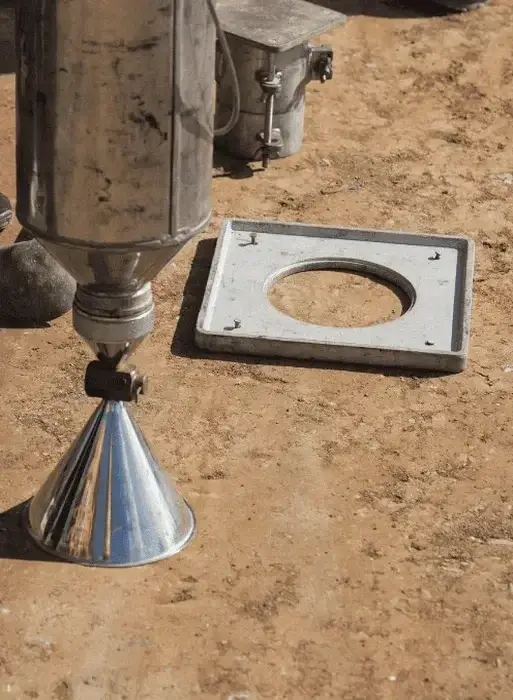
In-situ testing forms the backbone of geotechnical site investigation in Ottawa, encompassing a range of field methods that evaluate soil, rock, and groundwater conditions without removing samples from their natural environment. These tests carry out real-time data on density, strength, permeability, and deformation characteristics, which are essential for designing safe foundations, embankments, and infrastructure. In a city like Ottawa, where subsurface conditions can vary dramatically within short distances, in-situ testing offers a reliable way to capture the true behavior of geomaterials under natural stresses. Engineers rely on these methods to complement laboratory analyses, ensuring that designs reflect actual field conditions rather than idealized assumptions.
The significance of in-situ testing in Ottawa is magnified by the region's unique geological history. Much of the city is underlain by sensitive Leda clays, deposited in the Champlain Sea roughly 10,000 years ago. These fine-grained soils are prone to sudden loss of strength when disturbed, making field testing critical for assessing slope stability and excavation risks. Glacial till, sand, and gravel deposits also feature prominently, particularly in areas like Kanata and Barrhaven, while bedrock—predominantly limestone and shale—underlies the southern and western parts of the city. In-situ methods such as vane shear testing and cone penetration tests are invaluable for characterizing these challenging deposits, where sample disturbance during drilling could yield misleading results.
Canadian standards govern all in-situ testing procedures to ensure consistency, safety, and reliability. The Canadian Foundation Engineering Manual (CFEM) provides overarching guidance, while specific test methods align with ASTM International standards adopted across Canada. For instance, field density test (sand cone method) procedures follow ASTM D1556, a requirement frequently invoked in Ottawa's infrastructure and building projects. Provincial regulations under the Ontario Building Code also mandate that geotechnical investigations meet defined professional standards, often requiring a combination of in-situ and laboratory testing to satisfy the Ontario Ministry of Transportation's rigorous protocols for road and bridge construction.
The range of projects requiring in-situ testing in Ottawa is broad and growing. Residential subdivisions in Nepean and Orléans demand thorough compaction control, often verified through nuclear gauge testing or the sand cone method, to prevent future settlement issues. Major public works, such as the Confederation Line LRT expansion, depend on pressuremeter and dilatometer tests to assess ground stiffness along the alignment. Commercial developments, from downtown high-rises to suburban retail complexes, rely on in-situ permeability tests to design effective dewatering systems in areas with high groundwater tables. Even heritage projects, like the rehabilitation of the Rideau Canal walls, benefit from careful in-situ assessment to avoid disturbing historically sensitive soils.
In-situ testing evaluates soil and rock in their natural state, preserving stress conditions, moisture content, and fabric that are often altered during sampling and transport. This leads to more representative measurements of strength, compressibility, and permeability, which is critical in sensitive soils like Ottawa's Leda clays where disturbance can drastically change behavior.
Field vane shear testing is widely used to measure undrained shear strength in the sensitive Leda clays common to the Ottawa area. Cone penetration testing (CPT) with pore pressure measurement is also popular for profiling soft clay deposits and identifying potential failure planes, helping engineers assess slope stability and excavation risks.
Canadian geotechnical practice follows the Canadian Foundation Engineering Manual (CFEM) and relevant ASTM standards for specific test methods. Provincial regulations, including the Ontario Building Code, require that in-situ testing be performed under the supervision of qualified experts, with results documented in a manner suitable for design and regulatory review.
In-situ testing is typically required for subdivisions and custom homes to verify bearing capacity, assess groundwater conditions, and confirm proper compaction of fill materials. Municipal building permits often mandate a geotechnical report that includes field test results, especially in areas with known sensitive soils or variable bedrock depths.