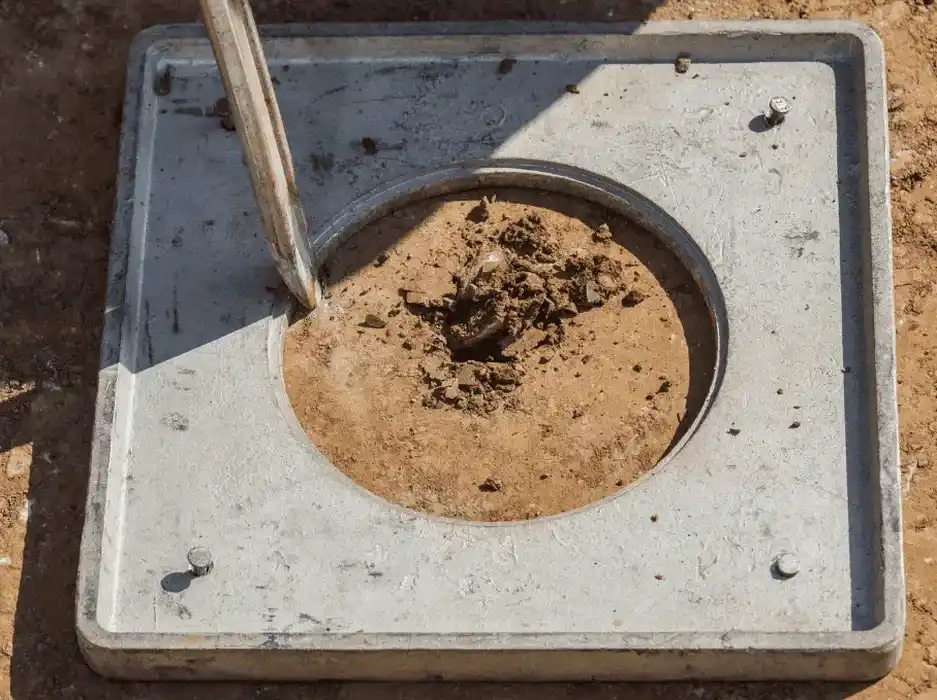
The triaxial cell gets pressurized to replicate the exact effective overburden stress at the target depth, right before we run the cyclic loading stage to measure pore pressure buildup. In Ottawa, this is not a routine checkbox—the Leda clay and deep sand lenses sitting under much of the downtown and the west end behave very differently under earthquake shaking, and a standard SPT refusal does not tell you whether that layer will liquefy and lose all shear strength. We run the analysis following the NBCC seismic hazard values for the Ottawa–Gatineau region, which sits in a moderate seismicity zone with a 2% in 50-year probability of exceedance, and we combine it with CPT testing to get a continuous soil behavior type profile without sample disturbance.
A factor of safety below 1.1 on a sand lens at 6 m depth can mean 40 to 70 mm of post-liquefaction settlement—enough to shear utility connections entering a building.