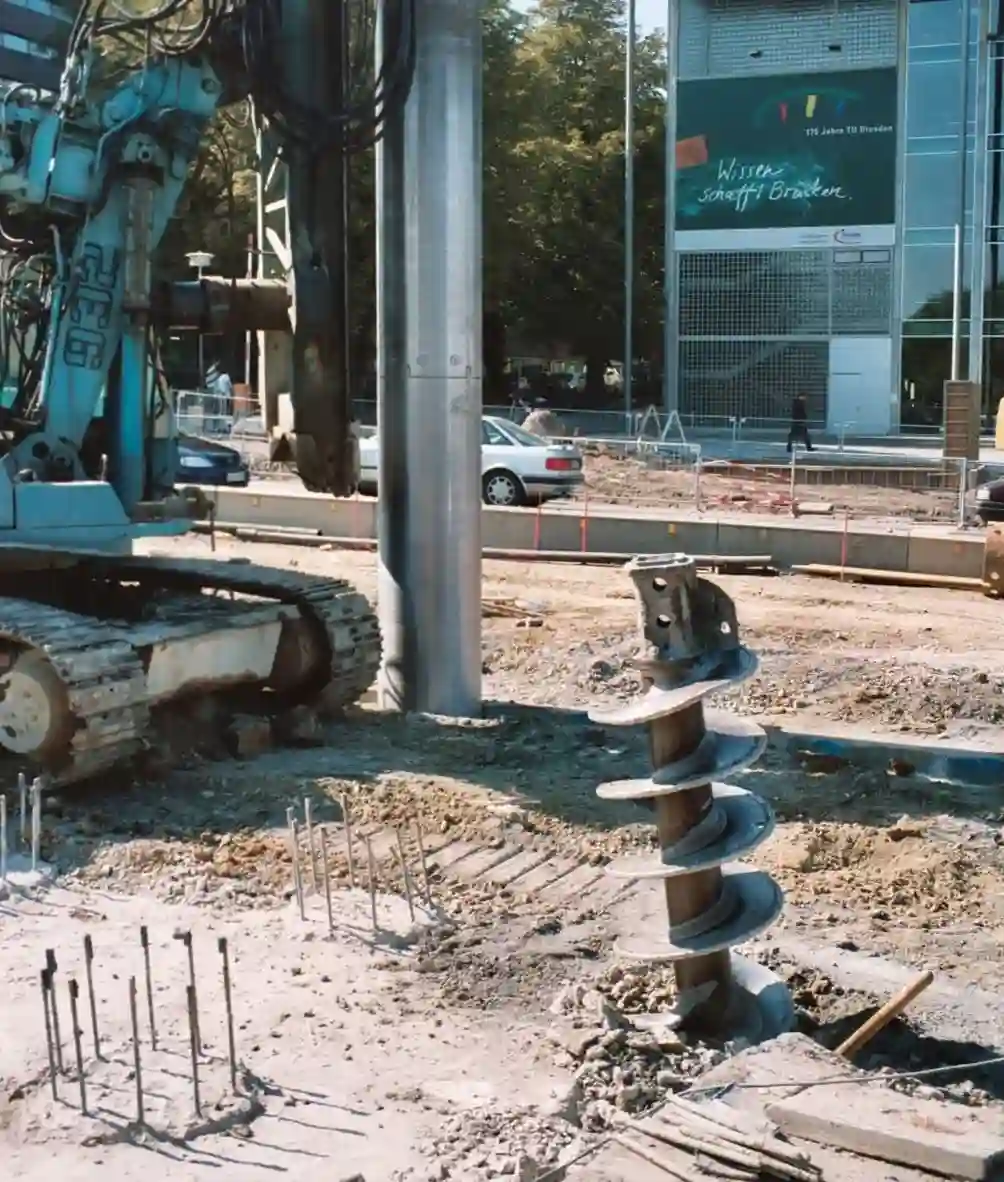
One of the most expensive mistakes we see in Ottawa construction is assuming all piles can be designed with a uniform socket length simply because bedrock exists somewhere on the site. The city's Paleozoic limestone and shale bedrock surface is notoriously irregular, with depth varying from 2 to over 30 meters across a single lot, and the overlying Champlain Sea silty clay, locally called Leda clay, can lose more than half its strength when disturbed. A pile design that does not account for this profile variability will result in differential settlements that crack superstructures within the first two freeze-thaw cycles. In our expertise, a solid pile foundation design here begins with a detailed stratigraphic model, often refined through CPT testing to map the clay sensitivity and identify potential soft zones before finalizing pile type and length.
A pile in Leda clay does not reach its design capacity the day it is installed—reconsolidation time matters as much as the geotechnical parameters.