GEOTECHNICAL ENGINEERING
OTTAWA
HomeRoadwayFlexible pavement design

Flexible Pavement Design in Ottawa: Navigating Frost Action and Marine Clay

Rigorous testing. Clear reporting.

LEARN MORE

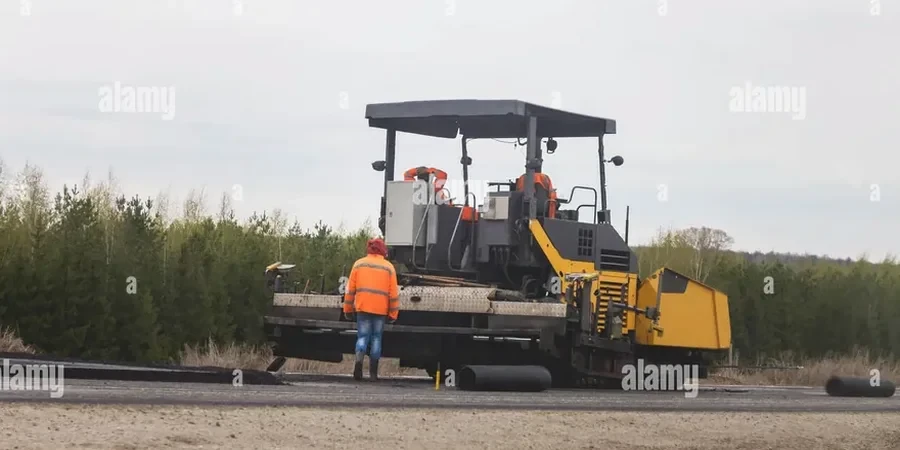
When you are working on a roadway or parking lot in Ottawa, the Ontario Provincial Standard Drawings (OPSD) and the City of Ottawa’s supplemental specifications aren't just paperwork—they are a survival guide. The capital’s pavement structures face a brutal annual cycle: deep frost penetration reaching 1.8 meters in an average winter, followed by a messy spring thaw that saturates the silty Leda clay subgrades so common across the region. A standard flexible pavement design that works in Toronto fails here because the bearing capacity of the moisture-sensitive subgrade can drop by over 60% during the thaw-weakening period. In our experience, integrating a solid CBR road test early in the investigation phase is the only reliable way to quantify that seasonal strength loss and avoid premature rutting. We also cross-reference these results with Atterberg limits to predict the volumetric instability of the native glacial sediments before finalizing the asphalt and granular base thickness.

In Ottawa, the pavement structure must be a drainage system first and a structural section second—because Leda clay doesn't forgive standing water.
Our service areas

Scope of work

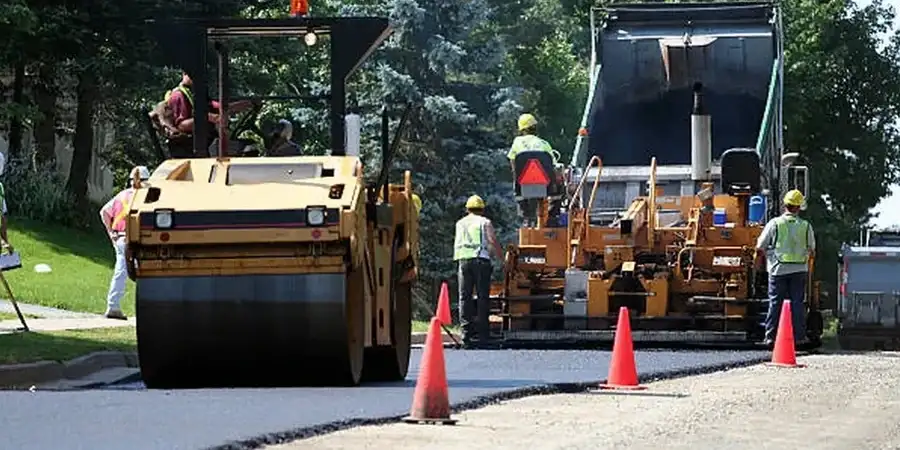
Ottawa’s urban expansion, particularly from the post-war boom that filled low-lying areas near the Rideau River and the vast Greenbelt, left a legacy of variable fill over compressible Champlain Sea deposits. This is not just dirt; it is a sensitive marine clay that loses its structure when remolded or saturated. Effective flexible pavement design here hinges on creating a high-modulus granular base that bridges these weak spots while managing drainage. The key structural layers—typically a 50 mm to 100 mm hot-mix asphalt surface over a minimum 150 mm of Granular A base and 300 mm of Granular B sub-base—must be designed to resist both traffic loading and environmental distress. We often refine the sub-base gradation through grain size analysis and specify non-frost-susceptible (NFS) materials to interrupt capillary rise. The interplay between mechanical stabilization and hydraulic performance is what ultimately prevents the pothole epidemic that plagues so many local streets after a hard freeze-thaw cycle.
Flexible Pavement Design in Ottawa: Navigating Frost Action and Marine Clay
Technical reference — Ottawa

Area-specific notes

The contrast between a project in Kanata’s shallow bedrock terrain and one in Orléans’ deep clay plains is night and day. In Kanata, you might hit limestone at less than a meter, which is great for support but terrible for drainage if you don't provide a lateral escape path for water trapped at the rock-soil interface. Over in Orléans or along the former bog margins, the risk is differential heave; you can have a pavement section sitting on 20 meters of soft clay right next to a transition zone into dense till. Without a carefully tapered granular wedge and proper subgrade preparation, the flexible pavement will crack at that transition within two seasons. The design must also account for the urban heat island effect in dense areas like Centretown, where rapid temperature swings can induce thermal cracking in the asphalt binder if the wrong performance grade is selected for the Ottawa climate.

Need a geotechnical assessment?

Reply within 24h.

Email: contact@geotechnicalengineering.vip

Standards used


Ontario Provincial Standard Specification (OPSS) 313 – Hot Mix Asphalt, Ontario Provincial Standard Specification (OPSS) 1010 – Granular Base and Sub-Base, ASTM D1557-12 – Modified Proctor for subgrade compaction, City of Ottawa Standard Drawings (SC Series) – Pavement Structures, AASHTO Guide for Design of Pavement Structures 1993 (with MTO supplement)

Technical data

ParameterTypical value
Design MethodAASHTO 93 / MTO Mechanistic-Empirical
Asphalt Binder Grade (PG)PG 58-34 or PG 64-28 (Ottawa climate zone)
Typical Design ESALs0.3 to 30 million (residential to arterial)
Frost Penetration Design Depth1.8 m (Ottawa historical max)
Minimum Granular Base (Gran A)150 mm (City of Ottawa standard)
Subgrade Resilient Modulus Target> 40 MPa (treated/improved layer)
Drainage Coefficient0.8 – 1.0 (adjusted for spring thaw saturation)

Common questions


What is the typical cost range for a flexible pavement design package for a new commercial lot in Ottawa?

For a standard commercial lot or small subdivision road in the Ottawa area, our design package—covering AASHTO structural design, subgrade CBR correlation, and OPSD-compliant layer detailing—usually falls between CA$2,390 and CA$6,140. The final figure depends on whether we need to run seasonal modulus testing on Leda clay samples or perform a detailed frost-depth analysis for the specific site.

How does the City of Ottawa's frost protection requirement affect the granular base thickness?

The City follows a principle of total pavement structural depth equivalent to a percentage of the frost depth. Since Ottawa can see up to 1.8 m of frost penetration into silty soils, the combined asphalt and granular thickness must prevent ice lens formation in the subgrade. If the native material is classified as highly frost-susceptible (often the case with the local silty clay), the spec typically requires full-depth replacement or an increased Granular B sub-base thickness to reach the non-frost-susceptible threshold.

Can you reuse existing asphalt millings in the granular base for an Ottawa rehabilitation project?

Yes, reclaimed asphalt pavement (RAP) is frequently used in the Granular A base course here under OPSS 1010 guidelines. The key is ensuring the RAP meets the gradation and plasticity requirements after blending. In Ottawa’s climate, we are careful to limit the RAP content to avoid a stiff, brittle base that could crack under extreme winter contraction. The blend must still provide adequate internal drainage to cope with the heavy spring melt.

What PG asphalt binder grade do you specify for Ottawa's climate?

We typically specify PG 58-34 for the majority of Ottawa’s collector and arterial roads to handle the low-temperature cracking risk during January cold snaps. In high-traffic corridors or intersections prone to shoving, we might bump the high-temperature grade to PG 64-28 or even PG 70-28 to resist rutting during the humid 30°C summer days, but we always retain the -28 or -34 low-temperature stiffness to ensure the pavement stays flexible through the winter.

Location and service area

We serve projects across Ottawa and surrounding areas.

View larger map