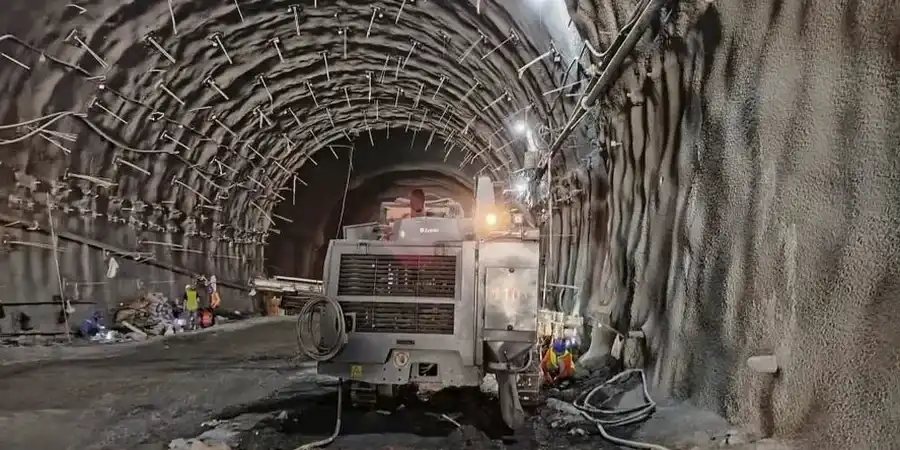
Excavation in Ottawa represents a critical discipline within geotechnical engineering, encompassing the planning, design, execution, and monitoring of earth removal to facilitate construction below ground surface. The capital's unique geological setting, characterized by sensitive marine clays, glacial till, and fractured bedrock, demands specialized approaches that go well beyond conventional earthmoving. From urban intensification projects in the downtown core to infrastructure upgrades across the National Capital Region, excavation work must contend with challenging ground conditions while protecting adjacent heritage structures, utilities, and transportation corridors. A rigorous understanding of soil-structure interaction is essential, as uncontrolled excavations in these deposits can trigger ground loss, slope instability, or basal heave, with consequences ranging from construction delays to catastrophic collapse.
Ottawa's subsurface is dominated by the Champlain Sea clay—a post-glacial deposit known for its high sensitivity and potential for large-scale retrogressive landslides in natural slopes. Within the urban environment, excavations frequently encounter this soft, compressible material interbedded with silts and sands, where groundwater management becomes a defining challenge. The presence of a shallow water table in many areas, combined with the low permeability of the clay, requires robust dewatering and depressurization systems to maintain stability and workability. Deeper excavations may intersect limestone and shale bedrock of the Ottawa Group, where controlled blasting or mechanical breaking introduces additional vibration and monitoring considerations. These local conditions make site-specific geotechnical investigation indispensable; generic assumptions borrowed from other regions often prove inadequate and unsafe.
The regulatory framework governing excavations in Ottawa is shaped primarily by the Ontario Building Code, which references the National Building Code of Canada and mandates geotechnical site investigations for all deep excavations. Critical provincial standards include Ontario Regulation 213/91 (Construction Projects) under the Occupational Health and Safety Act, which sets strict requirements for trench safety, shoring design, and worker protection. The City of Ottawa’s own by‑laws and permitting processes further require detailed excavation and shoring plans stamped by a licensed professional engineer, particularly when work encroaches on public rights‑of‑way or is adjacent to designated heritage properties. For projects involving soft ground tunnels, the technical guidelines of the Tunnelling Association of Canada and relevant CSA standards carry out additional best practices. Compliance is not merely administrative; it forms the backbone of risk management for any excavation project in the city.
The types of projects that demand advanced excavation expertise in Ottawa are diverse and growing. High‑rise commercial and residential developments in neighborhoods like Centretown and Little Italy routinely require deep basements extending four or five levels below grade, often within meters of century‑old masonry buildings. Infrastructure renewals, including the Confederation Line LRT expansion, have driven some of the most complex excavations in the city’s history, where geotechnical analysis for soft soil tunnels became a cornerstone of safe passage beneath sensitive downtown corridors. Utility installations, stormwater management vaults, and bridge foundation replacements also rely on precision excavation techniques. For each of these, the geotechnical design of deep excavations must integrate earth pressure calculations, structural support selection, and groundwater control into a coherent, defensible strategy.
The Champlain Sea clay is highly sensitive and prone to strength loss when disturbed, which can lead to retrogressive landslides in open cuts or basal heave in deep excavations. Its low permeability complicates dewatering, while shrinkage and swelling potential affect shoring performance. Careful sampling, laboratory testing, and staged excavation are essential to manage these risks.
Ontario Regulation 213/91 (Construction Projects) under the Occupational Health and Safety Act is the primary regulation. It mandates protective systems for trenches deeper than 1.2 metres, requires professional engineer design for excavations exceeding 6 metres or with complex conditions, and sets requirements for daily inspections, access/egress, and soil classification.
The Ontario Building Code requires a geotechnical site investigation for all deep excavations, typically those exceeding 3 metres in depth or where adjacent structures may be affected. The City of Ottawa also requires a stamped geotechnical report as part of the building permit or shoring permit application, detailing soil parameters, groundwater conditions, and design recommendations.
Monitoring programs use instruments like inclinometers, settlement points, crack gauges, and vibration monitors to track ground movement and structural response in real time. Threshold values trigger alerts, allowing contractors to adjust methods, increase support, or halt work before minor movements escalate into damage, thus protecting adjacent infrastructure and reducing liability.