GEOTECHNICAL ENGINEERING
OTTAWA
HomeExcavationsGeotechnical design of deep excavations

Geotechnical design of deep excavations in Ottawa

Rigorous testing. Clear reporting.

LEARN MORE

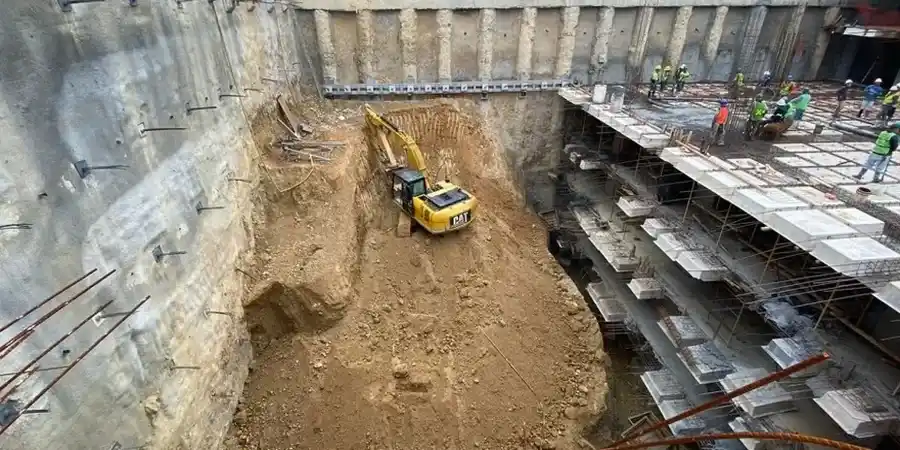
Ottawa’s downtown core sits on a deep deposit of sensitive Champlain Sea sediments, primarily Leda clay, over limestone bedrock. An excavation deeper than 3 meters in this material demands more than a generic shoring plan. The clay’s low remolded strength can trigger progressive failure if the wall system doesn’t limit deformation early. We combine CPT soundings with laboratory triaxial testing to define undrained shear strength profiles for staged excavation analysis. This data feeds directly into wall deflection predictions and strut load calculations. The Rideau Canal locks and several Parliament Hill parking structures were built through these exact soils, and the lessons from those projects shape our current design approach. A reliable excavation monitoring program validates the design assumptions during construction, which is critical when neighboring heritage buildings are only meters away.

In Ottawa’s Leda clay, wall stiffness matters more than soil strength for controlling excavation-induced settlement.
Our service areas

Scope of work

Ottawa’s urban expansion has pushed new construction into areas where the bedrock surface drops sharply, creating deep soil profiles near the Rideau River and along the future LRT corridors. The soil stratigraphy often includes a dry crust over soft silty clay, with a water table perched in the upper weathered zone. Deep excavation design here must address basal heave in the soft clay and potential piping at the bedrock interface. We integrate in-situ permeability tests to calibrate dewatering models and reduce the risk of blowout at the base of the cut. When the site is near existing transit infrastructure, we include seismic refraction surveys to map the top of rock precisely, which allows the shoring contractor to optimize socket depth for soldier piles. The city’s geotechnical review board expects a solid observational method, and we structure our design packages to support that process from tender through construction completion.
Geotechnical design of deep excavations in Ottawa
Technical reference — Ottawa

Area-specific notes

A tieback drill rig working in downtown Ottawa navigates tight access between heritage stone foundations. The operator installs anchors through the clay crust into the underlying till, using a duplex drilling method to prevent hole collapse in the sensitive soil. The biggest geotechnical risk isn’t the wall itself—it’s the groundwater response. A perched aquifer feeding into the excavation can soften the passive zone and trigger wall kick-out. We specify piezometer nests behind the wall and at the base of the cut, with real-time readouts tied to trigger levels. If the pore pressure doesn’t drop as predicted, the dewatering system gets a booster stage before the next lift is excavated. This conservative approach has prevented the type of base instability documented during excavations for the O-Train tunnel portals near the Rideau Centre.

Need a geotechnical assessment?

Reply within 24h.

Email: contact@geotechnicalengineering.vip

Standards used


NBCC 2020 – Part 4 Structural Design, CSA A23.3:19 – Design of Concrete Structures, ASTM D7181 – Consolidated Drained Triaxial Compression Test for Soils, NFPA 5000 – Building Construction and Safety Code (applicable sections)

Technical data

ParameterTypical value
Design standardNBCC 2020, CSA A23.3:19
Analysis methodFinite element (Plaxis 2D/3D)
Wall type evaluatedSecant pile, soldier pile, diaphragm
Soil model usedHardening Soil with small strain
Target max. lateral deflection0.3% of excavation depth
Dewatering methodDeep well + vacuum-assisted
Bedrock verificationCore drilling, 3 m socket minimum

Common questions


What is the typical cost range for a deep excavation design in Ottawa?

For a standard commercial excavation 3 to 6 meters deep, the geotechnical design fee ranges from CA$2,700 to CA$11,400. The final amount depends on the complexity of the soil profile, the number of shoring alternatives evaluated, and the level of instrumentation specified for construction monitoring.

How do you handle the risk of bottom heave in Ottawa’s Leda clay?

We run a total stress stability analysis at each excavation stage using the undrained shear strength from field vane tests and triaxial compression results. If the factor of safety against basal heave is below 1.5, we extend the wall embedment or install a jet grout plug at the base before the final lift.

What instrumentation is required for a deep excavation near Parliament Hill?

The National Capital Commission typically requires inclinometers in the shoring wall, settlement points on adjacent buildings, and vibrating wire piezometers to track pore pressure drawdown. We include a monitoring plan with amber and red trigger levels tied to specific response actions.

Location and service area

We serve projects across Ottawa and surrounding areas.

View larger map