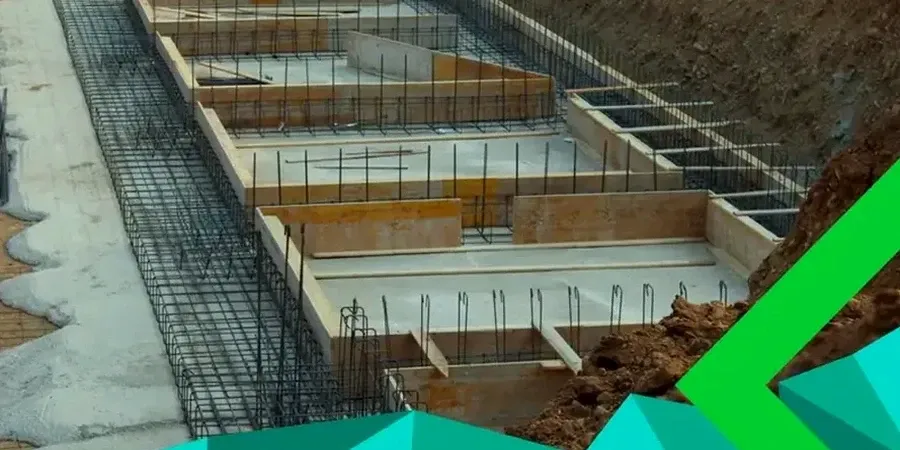
Foundation engineering forms the literal base of every successful construction project in Ottawa, encompassing the analysis, design, and construction of structural elements that transfer building loads to the underlying soil or rock. The capital region's unique geological history has created a patchwork of subsurface conditions ranging from dense glacial till and fractured limestone bedrock to highly sensitive marine clays, particularly the notorious Leda clay found in many eastern Ontario deposits. A properly designed foundation system must account for these variable ground conditions while meeting the rigorous demands of Canada's seismic hazard classifications and frost protection requirements. Whether supporting a low-rise residential structure in Kanata or a high-rise tower in the downtown core, the foundation category covers critical operations including shallow footings, deep foundation solutions, and specialized ground improvement techniques.
Ottawa's geotechnical landscape is dominated by the legacy of the Champlain Sea, which deposited thick sequences of silty clays across the region approximately 10,000 years ago. These Champlain Sea sediments, often termed Leda clays, exhibit challenging characteristics including high sensitivity, potential for significant consolidation settlement, and in some cases, a metastable structure that can collapse when disturbed. Beneath these softer surficial deposits, competent Paleozoic bedrock—primarily limestone and dolostone of the Ottawa Group—provides excellent bearing capacity but introduces complexities related to pinnacled rockhead profiles and karstic features in certain areas. Glacial till deposits of varying density and composition further complicate the stratigraphic picture, making comprehensive geotechnical investigations an absolute prerequisite for any foundation design in the National Capital Region.
All foundation work in Ottawa must comply with the Ontario Building Code (OBC), which adopts the National Building Code of Canada (NBC) with provincial amendments tailored to local conditions. Part 4 of the OBC governs structural design and explicitly references CSA A23.3 for concrete structures, CSA S16 for steel, and the Canadian Foundation Engineering Manual for geotechnical aspects. Seismic design falls under the requirements of NBC 2020, with Ottawa classified in a moderate seismic zone requiring careful consideration of site class effects and potential soil-structure interaction. Foundation depth must also respect the region's frost penetration depth of approximately 1.8 meters, and excavation activities are regulated under Ontario Regulation 213/91 for construction safety. Municipal permits from the City of Ottawa further require stamped geotechnical reports and foundation designs prepared by licensed Professional Engineers in the province.
This category serves a broad spectrum of project types across Ottawa's diverse built environment. Residential developments, from single-family homes in Barrhaven to multi-unit condominium projects in Centretown, rely on foundation assessments to determine appropriate footing types and bearing capacities. Institutional and commercial projects, such as school expansions or office buildings near the Parliamentary Precinct, frequently demand pile foundation design to navigate deep compressible soil layers or to control settlement on sensitive clay profiles. Infrastructure works including bridge abutments, retaining walls, and light rail transit extensions present additional foundation challenges where axial and lateral load demands require sophisticated deep foundation solutions. Even heritage restoration projects in areas like the ByWard Market often involve underpinning and foundation rehabilitation to preserve historic structures while meeting modern code requirements.
Foundation selection in Ottawa depends on subsurface conditions, structural loads, and site constraints. Shallow foundations like strip footings and raft slabs suit competent glacial till or shallow bedrock. Deep foundations including driven piles, drilled shafts, and helical piles are specified when soft Leda clays or fill materials are present, or when settlement must be tightly controlled. The choice integrates geotechnical recommendations with Ontario Building Code requirements and seismic design criteria.
Leda clay, deposited during the Champlain Sea period, is a sensitive marine clay prone to significant consolidation settlement and, in extreme cases, retrogressive landslides when disturbed. Its metastable structure can collapse under load or vibration, making it challenging for foundation support. Specialized investigation techniques including in-situ vane shear testing and oedometer consolidation tests are often required to characterize its behavior and design appropriate deep foundation or ground improvement solutions.
Foundation engineering in Ottawa must comply with the Ontario Building Code Part 4, which adopts the National Building Code of Canada with provincial amendments. Key referenced standards include CSA A23.3 for concrete, CSA S16 for steel, and the Canadian Foundation Engineering Manual. Seismic provisions follow NBC 2020, frost protection requires minimum 1.8-meter depth, and all designs must be sealed by a Professional Engineer licensed in Ontario.
Deep foundations become necessary when competent bearing strata lie too deep for economical shallow excavation, when soft or compressible soils like Leda clay are present, or when structural loads demand high capacity with minimal settlement. High-rise buildings, bridges, and structures on filled ground frequently require deep foundation elements such as driven steel piles, drilled concrete shafts, or helical piles to bypass unsuitable materials and transfer loads to bedrock or dense till.