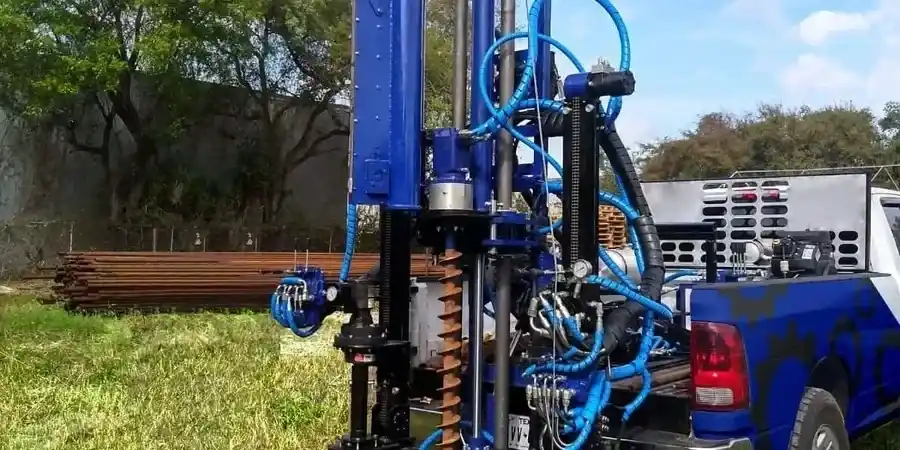
The National Building Code of Canada (NBCC 2020) sets the baseline, but Ottawa’s subsurface conditions demand a standard penetration test protocol that goes beyond the minimum. Much of the city rests on Champlain Sea sediments — sensitive Leda clay that can lose strength rapidly when disturbed — making SPT N-values a critical parameter for geotechnical design. The test captures both soil resistance and a disturbed sample for visual classification, providing a direct correlation between blow count and bearing capacity. In a region where the water table sits within 2 to 4 metres of grade across the downtown core and parts of Nepean, the SPT drilling method must account for casing advancement and careful wash boring in collapsing sands. The team follows ASTM D1586-18 with a safety hammer calibrated for energy ratio, ensuring that reported N-values reflect true in-situ conditions rather than equipment variability. Complementing the SPT with test pits in accessible areas allows correlation with visually logged soil units, while the CPT test provides a near-continuous profile in zones where thin silt seams govern stability and require higher vertical resolution.
Energy-corrected N60 values in Ottawa’s Leda Clay shift the conversation from generic bearing capacity to settlement-sensitive design on a compressible crust.